
Artefacts
-
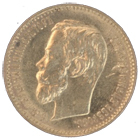 Numismatics 97More than 24 000 items. Collections of the numismatics fund reflect the history of St. Petersburg and Russia in general; give an idea of the political, social and cultural life of the XVIII-XX centuries and illustrate the history of the national medallic art and coinage.
-
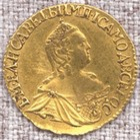 Coins 18The main part of this section is made up of pre-revolutionary coins of the period from XVIII to the beginning of the XX century, coined at the mints of St. Petersburg, Moscow and Yekaterinburg; the most interesting coins in the collection are those dating to the times of the reign of Peter I. Due to an active policy of acquisition carried out in the 1970-1980-ies the Soviet period (coins of ... ↓
 -
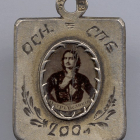 Commemorative medals and tokens of the XVIII - XX centuries 20The most interesting part of the collection presents samples of talented Russian (Timofey Ivanov, Samoilo Yudin, Fyodor Tolstoy, etc.) and foreign but working in Russia medal artists (Solomon Gouin, Johann Baltsar Gass, Carl Leberecht, Henrich Gube). The collection displays a wide range of commemorative medals of the Soviet period.
 -
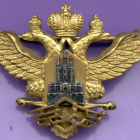 Lapel badges 19This section of collection includes the signs of educational organizations (civil and military), signs of public institutions and departments, various charitable institutions, societies, unions and committees. Many signs were fulfilled at high artistic level by famous Russian factories of XIX-XX centuries, such as “Edward”, Wunder brothers’, “E.Courtman”, “D.Osipov”.
 -
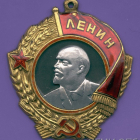 State Awards of the USSR and Russian Federation 19This section includes complexes of awards belonging to many outstanding military and political figures of Russia (Pilutov P.A., Pokrishev P.A., Zinchenko A.R., Shikin I.V.) and prominent representatives of science and culture (Lihachev D.S., Filatov A.N., Zhukovski P.M., Levinson E.A., Rudnev L.V.)
 -
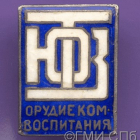 Commemorative and souvenir badges of soviet period 21The most interesting part of collection is represented by the signs and badges of 1920-1930-s, such as the signs for excellent participants of socialist competition of various ministries and departments, the signs of the 5-year-plan shock workers, the badges of voluntary societies and organizations. Thanks to the acquisition of rich collections of soviet badges from such collectors as Dunaevski ... ↓
-
-
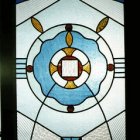 Architectural details 83Approximately 11 000 items. The history of formation of the fund may be divided into two periods - 1900-1910s (The Museum of Old Petersburg) and 1970-1980s when during reparation or demolition of old urban areas the museum received a lot of architectural objects. Chronologically the fund covers the period from the XVIII to mid-XX century.
-
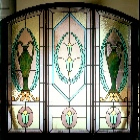 Stained-glass windows 11Decoration with stained-glass was one of the characteristic techniques in building of mid-XIX — early XX centuries in Saint-Petersburg. Though first stained-glass windows appeared in Russia in XII century, they were not widely spread. Stained-glass boom began during the reign of Nicolas I in 1820ies. At the end of XIX — beginning of XX century the appearance of the new technologies of coloring ... ↓
 -
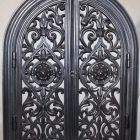 Fireplaces and stoves 16Well-made fireplaces and stoves are the adornment of any room. They bring in the atmosphere of maximum comfort and coziness. Decoration with tiles is one of the remarkable branches of applied art. Tiled stoves played a significant role in decorating of the interiors of temples, refectory chambers and living rooms. Craftsmen took the subjects for their artworks from legends, national embroidery ... ↓
 -
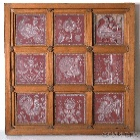 Fragments of the interiors and exteriors of buildings 21Ceramics was used in decoration of interiors and exteriors from ancient times. The greatest application of ceramics in architecture took place in modernist and neo-russian styles, which developed in late XIX — early XX centuries. Using ceramics in interiors gave high quality besides aesthetic effect, since ceramics was solid, weather-resisting and non-fading. It looked great combined with metal, ... ↓
 -
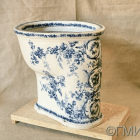 Collection of household appliances 9Various groups of sanitary ware of different firms and countries form the fund. There is an interesting collection of w.c. pans and wash-bowls of English firms «Schill Seebohm & Co Ltd» and «Cauldon», the w.c.pan «Gladiator» bundled with a tank painted with blue cobalt in decalcomania technique. The fund has marble wash-bowls, decorated by decalcomania method, and a number of granite, marble ... ↓
 -
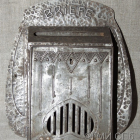 Decorative and industrial metal products 15The collection of decorative and industrial metal products of the fund includes park and garden fences, balcony barriers, holders of entrance canopies, street lamps, manhole covers, fireplace portals and furnaces, oven doors. The elements of bridge decorations (the Anichkov, the Blagoveshensky bridges), the elements of the dome of the Smolny cathedral are also in the fund. All these industrial ... ↓
 -
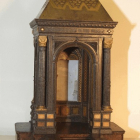 Models, reflecting the historical development of the city 11The models, kept in the fund, illustrate all the periods of development St.Petersburg as a city. They cover the period from the epoch of Peter the Great (for example, houses for different social classes) up to the second part of XX c., where one can find the projects of the Lenin stadium (1946), models “Planning of the Haven area” of 1950-ies, “Project of the 19-storey building of the 137th ... ↓
-
-
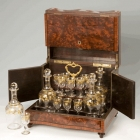 Historical household collection 83More than 15 000 items. The fund presents a variety of household objects made of metal, wood, paper, ivory and stone describing the life and manners of various social groups of St.Petersburg-Petrograd-Leningrad from the middle of the XVIII century to the present.
-
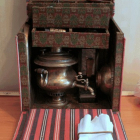 Travelware 8More than 100 units. The collection of travel supplies includes luggage trunks, suitcases, handbags, hat boxes and devices that can make life of travellers pleasant and easy. Moving from place to place was an essential part of the lifestyle in the 19th century. Treatment, visiting relatives and friends, moving from winter flat to summer house and back were the ... ↓
 -
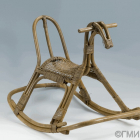 Toys and Board games 20More than 400 items The collection of foreign and Russian toys of the XIX – XX centuries is small (200 units), but quite various in origin, place of manufacture and artistic merits. A typical example of expensive toy for urban children is a doll with a porcelain head and body made of leather, fabric, papier-mache. Since 1880 dolls with children's proportions prevailed in production. Until ... ↓
-
 Toys 10The collection of foreign and Russian toys of the XIX – XX centuries is small (200 units), but quite various in origin, place of manufacture and artistic merits.
 -
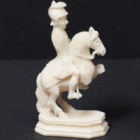 Chess 10From the second half of the 18th century, Russian chess sets of the so-called figurative type were made in the shape of two armies—Eastern and European. The main pieces were the Turkish sultan and the King, holding a scepter. Mammoth ivory, elephant ivory, walrus ivory and deer antler were used to make chess sets. Initially, each piece was carved by hand, but the invention of the lathe made the ... ↓
-
-
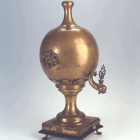 Samovars, broth-pots and cookware 8The collection includes more than 130 items among which are the examples of mass production and unique pieces. The bulk of the collection consists of samovars made in the second half of the nineteenth century in Tula at the factories of Batashev, Vorontsov, Reinhold and Emil Tejle, Shemarin brothers. There are samovars with hallmarks of the Moscow, Saint Petersburg and Warsaw masters. The ... ↓
 -
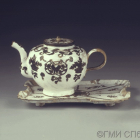 Tableware 8The historical collection contains about 1200 different types of metal tableware and cutlery. Among the rarest and most valuable items of the collection there is a tea set produced by the workshops of Veliky Ustyug, imitating expensive chinaware. To simulate porcelain the masters used various techniques. Metal (usually copper) shape of the objects was covered with several layers of white ... ↓
 -
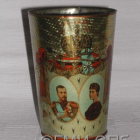 Souvenirs and gifts for jubilees 7The collection includes more than 500 samples of souvenir and gift products that are associated with important events of pre-revolutionary, Soviet and modern Russia – from the cup on the coronation of Emperor Nicholas II up to the egg "Saint-Petersburg", created recently in the workshop of Theo Faberge and gifted to our city. Souvenirs reflect national characteristics and artistic ... ↓
 -
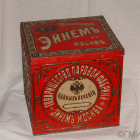 Packaging for food and industrial products 8About 1,600 units. Product packaging is a very important tool to influence consumers, so every manufacturer pays special attention to it. Factory packaging with artwork began from the second half of the XIX century. From this period the packaging has become a carrier of advertising information. Packaging the late XIX – early XX centuries (250 items) used a variety of shapes, colors, ... ↓
 -
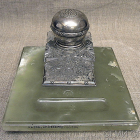 Inkstands and stationery 16Collection of inkstands has about 200 items of Russian and foreign production, made in different historical styles. Especially valuable are the author's and memorial items. First inkstands appeared with the creation of thin canvases, such as parchment and papyrus. In Egypt and China ink for writing was made of soot and oil. From the III century of our era a similar composition was used in ... ↓
 -
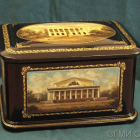 Caskets 8The collection of caskets has more than 250 objects of various shapes, styles and materials. Caskets of papier-mache with lacquer paintings form a separate group of about 30 units. The art of lacquer painting originated in China and then spread to Korea, Japan, countries of Indochina, India and Persia. In Europe workshops for the production of articles painted in the Chinese style appeared in ... ↓
-
-
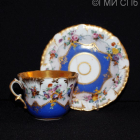 Ceramics and glassware 92More than 12 380 items. The fund posesses objects of artistic and historical value. These are sculptures, vases and tableware including items with views of St. Petersburg-Leningrad and its environs, with portraits and domestic scenes. Major part of the fund is presented by samples of mass production of ceramics and glass which were widely used by citizens.
-
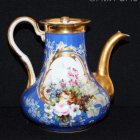 Russian ceramics 25More than 2000 units. The items (over 200 units), received from the collections of the Museum of Old Petersburg (founded in 1907) and the Museum of the City (founded in 1918) formed the beginning of the collection of Russian porcelain. Vases, decorative dishes, plates with the views of St. Petersburg, table sets, tea and coffee sets made at the state and private plants of Moscow, St. ... ↓
 -
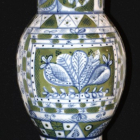 Soviet ceramics 26More than 2,500 units. Chronological beginning of this section is presented by the items of propaganda porcelain (1918-mid 1930s) – a new direction in art, aimed to serve the promotion of the young Soviet state. The porcelain of this period was produced in minor quantities - no more than 300 copies, and was intended mainly for exhibiting at numerous international exhibitions. A separate ... ↓
 -
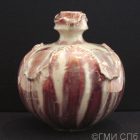 Foreign ceramics 17More than 2000 items. This section is represented by the products made in the end of XVIII - beginning of the XXI century at the factories of Western Europe. The beginning of the collection of foreign porcelain were the items (over 100 units) received from the collections of the Museum of Old Petersburg (founded in 1907) and the Museum of the City (founded in 1918). These items include vases, ... ↓
 -
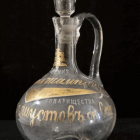 Russian, Soviet and West-European glassware 12More than 3000 items. This section includes the products made at Russian and foreign factories in the nineteenth and twentieth centuries. A small group form the items from the collections of the Museum of Old Petersburg (founded in 1907) and the Museum of the City (founded in 1918). For example, a glass with the engraved image of the panorama of Nevsky Prospekt from the Anichkov Palace to ... ↓
 -
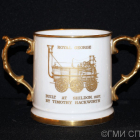 Collection of gifts 12More than 1000 units. Gifts were received from various community organizations and individuals with regard to the various anniversaries of the city. The Museum's collection includes gifts from the representatives of Leningrad - Petersburg, Kronstadt, Novgorod, Odessa, Mongolia, Central Asian republics, Ukraine, Belarus, Poland, Czech Republic, United Arab Emirates, France, England, Germany, ... ↓
-
-
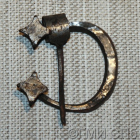 Archaeology 66More than 13,000 items. The archaeological collection was formed in early 1970s and was expanded with items from archaeological excavations of burial mounds, hills, sites of ancient settlements, embattled cities, etc., located on the territories of Leningrad, Pskov regions and St. Petersburg. The excavations were funded by the Museum of the History of the City and were guided by well-known ... ↓
-
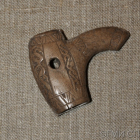
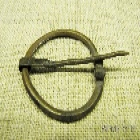 Medieval monuments of VIII — XV centuries 46This section is a part of the collection of the Fund dating back to the period of "Slavic colonization" of the North-West, the times of close contacts of the Slavs with the Finno-Ugric tribes and the Normans, and the formation of Ancient Russia. These are the complexes of objects found at archeological excavations of the settlement Gordets near Luga (IX-XIII centuries) and Kamno, the ... ↓
-
-
-
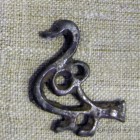 Scandinavian and Finno-Ugric cultures of the IX-XIII centuries 17The collection represents jewelry and weapons
 -
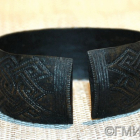 Baltic substrate of X-XII centuries 13Ornaments made of bronze, found in the Zalahtovye burial at Chudskoye lake .
-
-
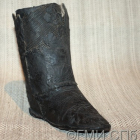 Urban medieval culture of XIII — XVII centuries 10Collection of items from Oreshek and Ivangorod is the largest in the Fund (about 7000 units from Oreshek and 2000 units from Ivangorod). It gives an idea about the history and culture of these cities-fortresses, since the moment of their construction (Oreshek in the XIV century, Ivangorod in XV century), covering the prosperous epoch of the powerful Novgorod-the-Great (Oreshek), the times of the ... ↓
 -
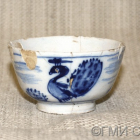 Arhaeology of XVIII-XX centuries 10Collection of objects is connected directly with the city of St. Petersburg since its foundation. This section includes items found during archaeological excavations at the Peter-and-Paul fortress and the historical part of city, during the restoration works in the architectural monuments, and found as lifting material during excavation works as well as the objects coming from private ... ↓
-
-
 Nyen Archaeology Foundation 2Number of items: 1,305 Period: Last quarter of the 16th – first half of the 20th centuries The numismatic and sphragistic items held in the collection are the result of archaeological excavations conducted in the territory of modern-day St. Petersburg. On the right bank of the Okhta River, where it flows into the Neva, archaeologists discovered the Swedish city of Nyen (from the Swedish word ... ↓
 -
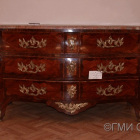 Decorative and applied arts 58About 6000 items. The collection includes objects of decorative art, interior design, industrial design, created both in Russia and in other countries in the XVIII–XX centuries and existed in Petersburg-Petrograd-Leningrad in the pre-revolutionary and Soviet periods. The objects reveal valuable information about the era of their creation and help to reflect the history of the city on the Neva ... ↓
-
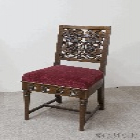 Furniture 26About 4500 items. Russian household furniture of the XIX-XX centuries forms the bulk of the collection. The most valuable group are the items produced at the famous St. Petersburg furniture workshops: G. Gambs, F.F.Melzer, G.V.Buchtger, S.P.Zimin, as well as the items, based on sketches by famous architects L. Ruska, V. Stasov. The collection also includes bent furniture by following companies — ... ↓
 -
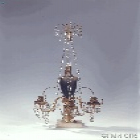 Lighting fixtures 14More than 800 items. This section of the collection is varied in composition. It includes products made of gilded or patinated bronze, intended for the decoration of the front interiors, and utilitarian lighting of the the most common types: candlesticks, chandeliers, sconces, lanterns, floor lamps made of different materials (metal, porcelain, glass, wood, stone). The chronological scope of ... ↓
 -
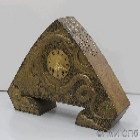 Clocks and watches 18More than 400 units. This section of the collection of objects of decorative art presents a variety of clocks — table, floor, wall clocks and wrist watches. In the collection you can see the clocks made in the XVIII–XX centuries by the West-European manufacturers and also by the companies that had stores and branches in St. Petersburg (P. Buhre, F. Winter, H.Moser, Lenzkirch) together with the ... ↓
-
-
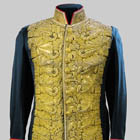 Costumes and fabrics 81More than 13 000 items. The fund presents items of dress, shoes, headwear and accessories of the XVIII - early XXI centuries, which allow to trace back the history of the costumes for several centuries.
-
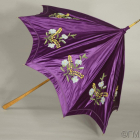 Accessories 22This section is the most diverse in its composition. The word accessory (fr. accessoire) is of French origin and refers to a small item, the associated object, supplementing the costume and allowing you to create one complete ensemble. The collection includes women's, men's and kid's costume accessories of various purposes, dating back to the period from XVIIIth century to the present time ... ↓
 -
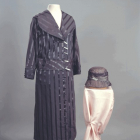 The collection of costumes 34Costume (lat. costume) - can mean clothes in general or distinctive style in clothing reflecting the social, national, regional belonging. Being an important part of the history of material and spiritual culture, it combines various kinds of decorative and applied arts — weaving, lace making, jewelry, embroidery, ornamentation, etc. Clothing is a direct symbol of being an individual person, a ... ↓
 -
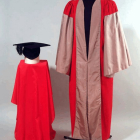 Memorial complex 25Memorial complex is an important part of the collection of the costume and fabrics. Memorial мuseum objects mean items associated with the important historical events or historical persons. In the context of the collection Fund these persons are honored workers of science and art of the late XIX – early XX centuries, poets and writers; soldiers of the First and Second World wars, Heroes of ... ↓
-
-
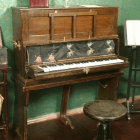 Musical instruments, equipment and sound records 692 704 items. The collection stored in the fund covers the time period of the second half of the XIX - end of the XX century.
-
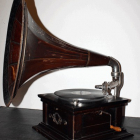 Mechanical reproducing equipment 14The fund presents mechanical musical instruments, musical boxes with scores and removable drives, phonographs and gramophones, dating back to the end of XIX — beginning of XX century
 -
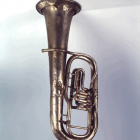 Musical instruments 14The fund presents different groups of musical instruments, dating back to the beginning and middle of the twentieth century - pianos, harmoniums, violins, guitars, harmonics, brass and percussion musical instruments of various domestic and foreign firms.
 -
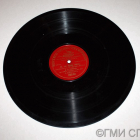 The gramophone records of 1900 - 1990-ies 41Collection of gramophone records of our Fund is extensive and diverse. We present the production of many well-known domestic and foreign manufacturers of gramophone records of XX century. There are early examples of records, made on the basis of shellac.
-
-
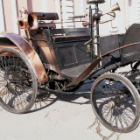 Science and technology 106More than 8 000 items. The main part of the fund consists of a variety of labour-saving devices, used in urban environment or manufactured by enterprises of St. Petersburg-Petrograd-Leningrad. Timeline of the items covers the period from the middle of the XIX - end of the XX century.
-
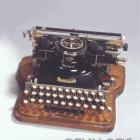 Office equipment 11The first reliable and convenient model of a typewriter appeared in 1873. The Remington factory began its production . Currently the collection of typewriters has 107 items dating back to 1870-1990-ies. The collection of calculating and computing machines consists of 45 items, including one of the first arithmometers, invented by Theophilus Odner in 1874
 -
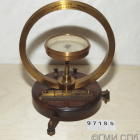 Physical devices and chemical laboratory glassware 17Physical devices and chemical laboratory glassware (items associated with the names of famous scientists - I.P. Pavlov, I.M.Sechenov, A.E.Favorski, S. V. Lebedev and others).
 -
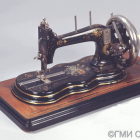 Collection of sewing machines of 1870-1990-ies 8The collection consists of 79 items. These are mainly household sewing machines, but there are also industrial ones. 34 companies producing sewing machines in the period 1870-1990-ies are represented in this collection.
 -
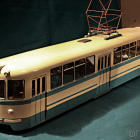 Vehicles and their models 14The fund includes cars, motorcycles and bicycles, as well as a collection of models, representing different kinds of sea, river, electric, rail and road transport and animal traction.
 -
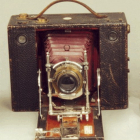 Photo and cine hardware 11The fund presents different types of film and photo cameras, enlargers, meters and devices for processing and printing: timers, processing tanks, mounting frames, etc.
 -
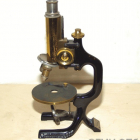 Optical devices 11The collection presents the microscopes ( 51 item dating back to 1870 - 1973-ies), binoculars - 58 items ( 1820-1981-ies), telescopes - 8 subjects (the end of XIX century - 1910-ies)
 -
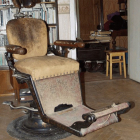 Medical instruments 10The collection includes surgical, gynecological and other tools, a variety of instruments for measuring pressure, cardiac, ophthalmic and other instruments, including the equipment of the dental office of the late XIX century
 -
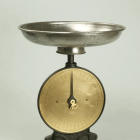 Devices for weight, volume and linear measurement 11Collection of the weight measures consists of 160 items and includes the steelyards, beam, spring, analytical and postal scales. The collection of linear measures includes meters, yards, roulettes, etc., - 105 items (1860-1970-ies)
 -
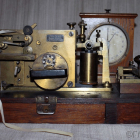 Communication equipment 12The Fund presents a collection of various radio equipment: radios, speakers, collections of telegraph and telephone apparatus, TV-sets dating back to the end 1930-1980-ies.
-
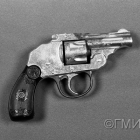
Weapons 12
More than 1 000 items. The fund contains different types of Russian and foreign firearms and cold-steal weapons, ammunition and protective arms of the XVIII-XX centuries.
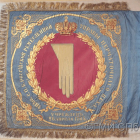
Textiles and banners 83
About 4000 items. The fund keeps fabrics (excluding clothes and accessories), which reflect the history, culture and everyday life of St. Petersburg during the period of XVIII-early XXI centuries.
-
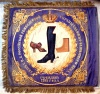 Banners 271 400 units of storage. The unique collection of banners (47 items) of the St. Petersburg handicraft workshops of XVIII-XIX centuries forms the basis of the collection. These were acquired in 1923 from the City administration. The Fund widely presents military banners of the XIX-XX centuries; civil banners: banners of various enterprises and institutions of Soviet period (the ... ↓
 -
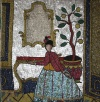 Collection of interior fabric items of the XVIII - XX centuries 171 400 units. Includes typical subjects of interior: floor and wall carpets, decorative panels, tapestries, fireplace screens, tablecloths, lace products, sewing, beading, embroidery, etc.
 -
-
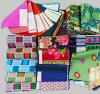
 Collection of cotton fabrics of V.F. Zeits 14250 units. The collection includes samples of cotton fabrics of the I-st third of the XX century, Russia, Ivanovo-Voznesensk.
 -
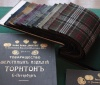 Collection of tissue samples from the "Thornton's Woollen Products Co" - "Nevskaya Manufactory" 10The collection includes samples of wool fabrics of the 2-nd half of XIX - early XXI centuries.
-
-
 Оriflammes 14The Fabrics and Banners Collection houses a collection of festive decorations from Petrograd-Leningrad for various anniversaries and commemorative dates. The most expressive and original are the oriflammes—festive banners that adorned Nevsky Prospekt during the 70th anniversary of the Great October Socialist Revolution in 1987. They were mounted in special frames and attached to utility poles ... ↓
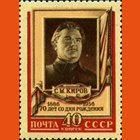
Collections of the Sergey Kirov Museum 51
The basis of the museum's collection is formed by the Sergey Kirov Museum Fund, which stores 38 765 items.