Государственный музей истории Санкт-Петербурга
state museum of the history
of St.PETERSBURG
+7 (812) 230-64-31
THE MUSEUM
  • History of the Museum
  • Museum complex
    • Peter and Paul fortress
      • Interactive map
      • History
      • Photo gallery
      • 3D panoramas
      • Web cams
    • Oreshek Fortress
      • Map
      • History
      • Photo gallery
    • Monument to the Heroic Defenders of Leningrad
      • History
      • Photo gallery
    • Sergey Kirov Museum
      • History
      • Sergey Kirov Collection
      • Publications
      • Photo gallery
      • Sergey Kirov museum website
    • Rumyantsev Mansion
      • History
      • Photo gallery
    • Alexander Blok Museum
      • History
      • Photo gallery
    • Museum of Printing
      • History
      • Photo gallery
    • St Petersburg Museum of Avant-garde (Matyushin's House)
      • History
      • Photo gallery
  • News
  • Management
  • Cooperation
    • Other museum collaboration
    • Partners
  • Event organization
  • Documents
  • Archive
TO VISITORS
  • Virtual tour
  • Admission
  • Opening hours
  • Buy tickets online
  • Getting here
  • Accessible environment
  • Benefits and rights
  • Accompanying services
  • Souvenirs
  • Appeals of citizens
  • FAQ
EXHIBITS & EXHIBITIONS
  • Permanent displays
  • Temporary exhibitions
  • Routes
  • Exhibition aboard
EVENTS
  • Events
  • Ceremony
PROGRAMMES
  • Lectures
  • For children
  • Guided tours
  • Virtual Reality
FOR SPECIALISTS
  • Conferences
  • Museum internship
  • Scientific Library
  • Scientific and departmental archive
  • Restoration and reconstruction
PUBLICATIONS
  • Elecronic library
COLLECTIONS
  • Access to funds
  • Tariffs
  • Appeal to the donors
  • Interesting Facts
    Государственный музей истории Санкт-Петербурга
    THE MUSEUM
    • History of the Museum
    • Museum complex
      • Peter and Paul fortress
        • Interactive map
        • History
        • Photo gallery
        • 3D panoramas
        • Web cams
      • Oreshek Fortress
        • Map
        • History
        • Photo gallery
      • Monument to the Heroic Defenders of Leningrad
        • History
        • Photo gallery
      • Sergey Kirov Museum
        • History
        • Sergey Kirov Collection
        • Publications
        • Photo gallery
        • Sergey Kirov museum website
      • Rumyantsev Mansion
        • History
        • Photo gallery
      • Alexander Blok Museum
        • History
        • Photo gallery
      • Museum of Printing
        • History
        • Photo gallery
      • St Petersburg Museum of Avant-garde (Matyushin's House)
        • History
        • Photo gallery
    • News
    • Management
    • Cooperation
      • Other museum collaboration
      • Partners
    • Event organization
    • Documents
    • Archive
    TO VISITORS
    • Virtual tour
    • Admission
    • Opening hours
    • Buy tickets online
    • Getting here
    • Accessible environment
    • Benefits and rights
    • Accompanying services
    • Souvenirs
    • Appeals of citizens
    • FAQ
    EXHIBITS & EXHIBITIONS
    • Permanent displays
    • Temporary exhibitions
    • Routes
    • Exhibition aboard
    EVENTS
    • Events
    • Ceremony
    PROGRAMMES
    • Lectures
    • For children
    • Guided tours
    • Virtual Reality
    FOR SPECIALISTS
    • Conferences
    • Museum internship
    • Scientific Library
    • Scientific and departmental archive
    • Restoration and reconstruction
    PUBLICATIONS
    • Elecronic library
    COLLECTIONS
    • Access to funds
    • Tariffs
    • Appeal to the donors
    • Interesting Facts
      Государственный музей истории Санкт-Петербурга
      • МУЗЕЙ
        • Назад
        • МУЗЕЙ
        • History of the Museum
        • Museum complex
          • Назад
          • Museum complex
          • Peter and Paul fortress
            • Назад
            • Peter and Paul fortress
            • Interactive map
            • History
            • History burnings
            • Photo gallery
          • Oreshek Fortress
          • Monument to the Heroic Defenders of Leningrad Museum
            • Назад
            • Monument to the Heroic Defenders of Leningrad Museum
            • History
            • Photo gallery
          • Sergey Kirov Museum
            • Назад
            • Sergey Kirov Museum
            • History
            • Sergey Kirov Collection
            • Publications
            • Photo gallery
            • Sergey Kirov museum website
          • Rumyantsev Mansion
            • Назад
            • Rumyantsev Mansion
            • History
            • Photo gallery
          • Alexander Blok Museum
            • Назад
            • Alexander Blok Museum
            • History
            • Photo gallery
          • Museum of Printing
            • Назад
            • Museum of Printing
            • History
            • Photo gallery
          • St Petersburg Museum of Avant-garde (Matyushin's House)
            • Назад
            • St Petersburg Museum of Avant-garde (Matyushin's House)
            • History
            • Photo gallery
        • Contacts
        • Management
        • Board of Trustees
        • News
        • Cooperation
          • Назад
          • Cooperation
          • Other museum collaboration
          • Partners
            • Назад
            • Partners
            • Russian partners
            • Information partners
        • Additional services
          • Назад
          • Additional services
          • Events organization
          • Fund's services
        • About museum
          • Назад
          • About museum
          • Constituent documents
          • Financial and economic documents
          • Stop corruption
          • Antimonopoly compliance
          • Occupational safety and health
          • Auction
          • Rent
          • Constituent documents
        • Archive
      • ПОСЕТИТЕЛЯМ
        • Назад
        • ПОСЕТИТЕЛЯМ
        • Virtual tour
        • Admission
        • Opening hours
        • Buy tickets online
        • Getting here
        • Accessible environment
        • Benefits and rights
        • Accompanying services
        • Souvenirs
        • Appeals of citizens
        • FAQ
      • ЭКСПОЗИЦИИ и ВЫСТАВКИ
        • Назад
        • ЭКСПОЗИЦИИ и ВЫСТАВКИ
        • Permanent displays
        • Temporary exhibitions
        • Routes
        • Exhibition aboard
      • СОБЫТИЯ
        • Назад
        • СОБЫТИЯ
        • Events
        • Ceremony
      • ПРОГРАММЫ
        • Назад
        • ПРОГРАММЫ
        • Lectures
        • For children
        • Guided tours
      • СПЕЦИАЛИСТАМ
        • Назад
        • СПЕЦИАЛИСТАМ
        • Conferences
        • Museum internship
        • Scientific Library
        • Scientific and departmental archive
        • Guides and translation guides
        • Restoration and reconstruction
      • ИЗДАНИЯ
        • Назад
        • ИЗДАНИЯ
        • Научные сборники
        • Альбомы
        • Каталоги
        • Издания к выставкам
        • Путеводители
        • Книги
        • Издания для детей
        • Мультимедийные
        • Буклеты
        • На иностранных языках
        • АРХИВ
      • ФОНДЫ
        • Назад
        • ФОНДЫ
        • Access to funds
        • Tariffs
        • Appeal to the donors
        • Interesting Facts

      Historical household collection

      • Main
      • Collections
      • Artefacts
      • Historical household collection
      • Travelware
        Travelware  8
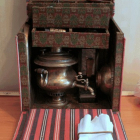
        More than 100 units.    The collection of travel supplies includes luggage trunks, suitcases, handbags, hat boxes and devices that can make life of travellers pleasant and easy.     Moving from place to place was an essential part of the lifestyle in the 19th century. Treatment, visiting relatives and friends, moving from winter flat to summer house and back were the ... ↓ reasons to go.     The duration of the trip was influenced by weather, road conditions and other external conditions. The trip from St. Petersburg to Moscow in a horse-drawn carriage or sleigh could last about 4 days. Passenger transport by steamers and by rail reduced the duration of trips a lot, but they still required a lot of preparation. A kind of road lifestyle was formed, which indispensable accessories were a variety of chests and boxes, road secretary-boxes with items for writing, with caches for storage of especially important papers. Travelers used drawers with compartments for tea, vessels for drinks, first-aid kits.     To protect things made of brittle materials, the lining of velvet or silk on cotton was used. Thanks to this lining and strong body a lot of fragile items from the road boxes and bags reached our days in excellent condition.     This proves once again the highest level of quality of the old masters. Traffic boxes-chests, widely existed not only in Russia but also in Western Europe. They are vividly described in the works of Russian writers — A.S.Pushkin (“The Captain's Daughter), V.S.Sologub ("Tarantas"), N.V.Gogol ("Dead Souls"), L.N.Tolstoy ("Long Drive"), etc. ↑
      • Toys and Board games
        Toys and Board games 20
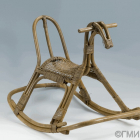
        More than 400 items The collection of foreign and Russian toys of the XIX – XX centuries is small (200 units), but quite various in origin, place of manufacture and artistic merits. A typical example of expensive toy for urban children is a doll with a porcelain head and body made of leather, fabric, papier-mache. Since 1880 dolls with children's proportions prevailed in production. Until ... ↓ 1920-ies these toys were produced abundantly. Then they were replaced by dolls made of celluloid, popular in 1930-1950. Young children like toys of the simplest designs, such as horses on platforms with wheels or rocking horses. Design of these toys has changed little to the present time. Children of noble families liked more complicated mechanical toys with musical arrangements popular in the second half of the XIX century. Often they became family heirlooms and were cherished as a memory from childhood. Board games and alphabets are invaluable sources for studying the life of the child of the past (about 200 units). This section presents such integral parts of world culture as chess, checkers, bingo, dominoes, cards. The Board game "Halma-Eckha" became popular in the late nineteenth century. Its roots lead to the Far East, to Chinese checkers — the game considered to be of a strategic nature. Board games, often being collective, develop the child's logical thinking, show different ways of training and education. Computer games appeared in the end of XX century and started to replace and move the Board games into the background. That is why the collection of the Museum is of great interest from the point of view of the history of education and culture. ↑
        • Toys
          Toys 10
          The collection of foreign and Russian toys of the XIX – XX centuries is small (200 units), but quite various in origin, place of manufacture and artistic merits.
        • Chess
          Chess 10
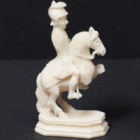
          From the second half of the 18th century, Russian chess sets of the so-called figurative type were made in the shape of two armies—Eastern and European. The main pieces were the Turkish sultan and the King, holding a scepter. Mammoth ivory, elephant ivory, walrus ivory and deer antler were used to make chess sets. Initially, each piece was carved by hand, but the invention of the lathe made the ... ↓ bone carver's work easier. The ivory carvers from the village of Kholmogory excelled in ivory. They produced chess sets for export, and today their pieces can be found in European museums and private collections. ↑
      • Samovars, broth-pots and cookware
        Samovars, broth-pots and cookware 8
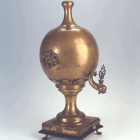
        The collection includes more than 130 items among which are the examples of mass production and unique pieces. The bulk of the collection consists of samovars made in the second half of the nineteenth century in Tula at the factories of Batashev, Vorontsov, Reinhold and Emil Tejle, Shemarin brothers. There are samovars with hallmarks of the Moscow, Saint Petersburg and Warsaw masters. The ... ↓ tradition of Russian tea drinking with samovar has evolved over more than two centuries. Since the second half of the 18th century to the present days, the samovar was a symbol of the Russian way of life. In some homes it still holds pride of place among the dining utensils. Samovars are not only varied in their forms, but also in the material they are made of — red copper, tombac, cupronickel, brass with electroplated silver coating or nickel plating. The Museum collection is constantly replenished with rare examples of samovars for more complete characterization of the species of decorative and applied arts of the past. ↑
      • Tableware
        Tableware 8
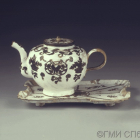
        The historical collection contains about 1200 different types of metal tableware and cutlery. Among the rarest and most valuable items of the collection there is a tea set produced by the workshops of Veliky Ustyug, imitating expensive chinaware. To simulate porcelain the masters used various techniques. Metal (usually copper) shape of the objects was covered with several layers of white ... ↓ enamel. The last layer was decorated with ornamented plates of silver foil. In the first half of the XIX century there was a decline in the area of enamel production. Products made of substitutes of silver came into fashion. They have found mass distribution in the circles of the average income of the population, and in the families of noblemen, and even at the Royal court. The main centers of production of metal tableware have become such cities as Moscow, St. Petersburg and Warsaw, while the Polish companies were leading. Production in this area developed up to 1880-ies, when the technique of production of silvered metal products has reached such a high level that objects of brass and Nickel silver were almost indistinguishable from real silver. The collection includes 30 of tableware made at famous Warsaw factory of products made of cladding silver and Nickel silver “Fraget”, founded by brothers Alphonse and Joseph Fraget in 1824. A tea set in the "Old Russian style" is considered to be the work of jewelry art. It was made in the workshop of F. K. Yartsev (1888, Moscow). "Russian style" created a whole line in the production of art objects made of silver. Numerous factories and workshops of gold and silversmiths have created cutlery, tea and coffee sets using forms and decorative motifs borrowed from folk and ancient Russian art. In the twentieth century dominated inexpressive stamped cutlery made of stainless steel, aluminum, in the best case of Nickel silver. But these items also have historical value, therefore they are included in the collection and exhibited in the Museum. ↑
      • Souvenirs and gifts  for jubilees
        Souvenirs and gifts for jubilees 7
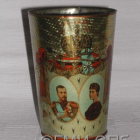
        The collection includes more than 500 samples of souvenir and gift products that are associated with important events of pre-revolutionary, Soviet and modern Russia – from the cup on the coronation of Emperor Nicholas II up to the egg "Saint-Petersburg", created recently in the workshop of Theo Faberge and gifted to our city. Souvenirs reflect national characteristics and artistic ... ↓ traditions. Handicrafts were always very popular in our country: wooden utensils with bright Khokhloma painting, wooden Bogorod toys and Dymkovo toys of painted clay, articles of papier-mache with miniature painting, etc. Among the gifts of utilitarian purpose there are printed items: notebooks, albums and other stationery goods. A significant part of the collection form the gifts received by St. Petersburg from various organizations and representatives of Russia and foreign countries. This section was significantly enlarged after the celebration of the 300th anniversary of St. Petersburg in 2003 — 30 gifts were transferred to the Museum. ↑
      • Packaging for food and industrial products
        Packaging for food and industrial products 8
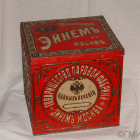
        About 1,600 units. Product packaging is a very important tool to influence consumers, so every manufacturer pays special attention to it. Factory packaging with artwork began from the second half of the XIX century. From this period the packaging has become a carrier of advertising information. Packaging the late XIX – early XX centuries (250 items) used a variety of shapes, colors, ... ↓ textures. Particularly original was the packaging of confectionery products. Large factories had their own workshops for the production of packaging. Smaller companies had to order packaging at special factories. In St. Petersburg it was the "Institution of Graphic Arts. Colour lithography by E. I. Marcus" and "Factory for metal products and colour lithography on tin by G. Haimovich". Printing, embossing, metallochromy were used in manufacturing. The level of skill and artistic merit of this production are very different. Distinguished artists of the association "World of art" took part in the creation of the packaging along with ordinary graphic designers. However, due to the fact that designing "sticker" was not prestigious, nearly all works in this area are unnamed. In 20-ies of XX century in Soviet Russia old forms and ways of decoration in packaging were used sometimes, but it was only inertia. The collection of postwar packaging is the most extensive (approximately 1300 units) and it is interesting from the point of view of completeness of information about enterprises and product manufacturers. Now, with the new possibilities of printing, production of fancy packaging was resumed. Among the recent arrivals are about 30 units of packaging of goods, released for the 300th anniversary of St. Petersburg. ↑
      • Inkstands and  stationery
        Inkstands and stationery 16
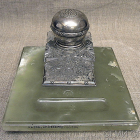
        Collection of inkstands has about 200 items of Russian and foreign production, made in different historical styles. Especially valuable are the author's and memorial items. First inkstands appeared with the creation of thin canvases, such as parchment and papyrus. In Egypt and China ink for writing was made of soot and oil. From the III century of our era a similar composition was used in ... ↓ Rome and Greece. As the inkstand one could use any suitable vessel: earthenware bowls, horns inserted in the top of the table, chemist's vials. But most often the vessel for ink was made on purpose, having at first the simple form of cylinder, cube, jug, glass. For centuries the appearance of the inkstands has changed. In XVIII-XIX centuries the production and variety of inkwells increased — from the massive inkstands, which occupied the central place on the desk, to road devices with ink pots. A variety of metals, glass, porcelain, marble, horn, semi-precious stones were used as a material. Mass production of inkwells was organized not only in numerous bronze casting workshops, but also in large jewelry companies having the title of Suppliers of the Imperial court – Sazikov, Ovchinnikov, Khlebnikov, Grachev brothers, Faberge. Exceptional craftsmanship of manufacturers quite often turned utilitarian objects into works of art, which were used not only directly, but also to decorate the interiors of offices, libraries and boudoirs. Inkstands were very common gifts during the XIX –XX centuries. The shops of St. Petersburg have always had a rich selection of these products, designed for different tastes and financial possibilities. ↑
      • Caskets
        Caskets 8
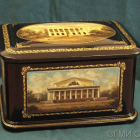
        The collection of caskets has more than 250 objects of various shapes, styles and materials. Caskets of papier-mache with lacquer paintings form a separate group of about 30 units. The art of lacquer painting originated in China and then spread to Korea, Japan, countries of Indochina, India and Persia. In Europe workshops for the production of articles painted in the Chinese style appeared in ... ↓ the XVII century. In Russia the production technology of similar products was developed in the late XVIII century. The leading position in Russia was undoubtedly occupied by the factory of merchants Lukutins near Moscow. They managed not only to organize the production, but made it deeply traditional. The factory founded in the late XVIII century by merchant P.I.Korobov in the suburban village of Danilkovo (adjacent to Fedoskino and later merged with it) released lacquered visors for headgear of the Russian army. This factory began to produce caskets. In 1818 the factory passed to Korobov’s daughter, and in 1824 to his son-in-law P. V. Lukutin. A snuff box with genre scene in the Chinese style comes from the early lacquerware of the Lukutin factory. Oriental theme was often used in lacquerpaints of 1830-1840's. Peter Lukutin changed the subject of lacquer miniatures focusing on the Russian theme which became popular in the second half of the XIX century. In miniature painting of Lukutin’s artists a series of images of traders, haymakers, peddlers and other typical representatives of the Russian people have appeared. The popularity of the products of the Lukutin factory was in the XIX century so great that all the papier-mache lacquerware made in workshops near Moscow became known as Lukutin’s. After the closure of the factory in 1904 hard times began for lacquerware art. In 1910 with the support of Fund of Sergey Timofeyevich Morozov the "Fedoskino labour artel" was established for former masters of Lukutin’s factory. The work of this artel in 1940-50 years has been focused mainly on copying of works of V. M. Vasnetsov, V. G. Perov, V. I. Surikov and other artists. Most talanted artists have created their own compositions. A casket with the views of Leningrad holds a special place in the collection. It is the gift of a group of artists of the Fedoskino cooperative to the 250 anniversary of the city. One of the latest arrivals in this section of the collection was the box by artist A. Petrov with a miniature view of the Point of the Vasilevsky island inspired by the engravings of XVII-XIX centuries. ↑
      • Access to funds 
      • Tariffs 
      • Appeal to the donors 
      • Interesting Facts 
      Information
      More than 15 000 items. The fund presents a variety of household objects made of metal, wood, paper, ivory and stone describing the life and manners of various social groups of St.Petersburg-Petrograd-Leningrad from the middle of the XVIII century to the present.


      ← Back to section
      Национальные проекты России

      Достижения регионов России

      Незаконное нанесение граффити

      Незаконное нанесение граффити баннер1.jpg
      Our contacts

      +7 (812) 230-64-31
      gmispb@cult.gugov.spb.ru
      State budgetary institution of culture «State Museum of the History of St. Petersburg»
      Stay in touch


      © 2026 Все права защищены.
      © 2026 All rights reserved. Служба по контракту
      Print version
      RU