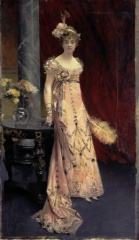
Russian Descendants of the French Empress. The Dukes of Leuchtenberg in St Petersburg
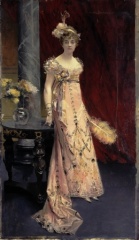 from 7 October 2011 to 1 February 2012
The exhibition brings together more than 100 items from the collection of State Hermitage and State Museum of the History of St Petersburg, which initially were part of the rich artistic collection of the Dukes of Leuchtenberg de Beauharnais.
Rumyantsev Mansion, 45 Galernaya Street
The story of the family of von Leuchtenberg de Beauharnais in Russia began in the end of the 1830s, when Maximillian de Beauharnais, 3rd Duke of Leuchtenberg, the grandson of Joséphine de Beauharnais, the first wife of Napoléon Bonaparte, married Grand Duchess Maria Nikolaevna of Russia, the daughter of Nicolas I. The main condition of the marriage was that the young couple and their children should stay in Russia. Duke Maximillian von Leuchtenberg and Grand Duchess Maria Nikolaevna took interest in collecting of objects of fine art. From 1843 the Duke headed Russian Academy of Arts, being succeeded by his wife after his death.
A vast collection of Dukes of Leuchtenberg brought together objects of West-European and Eastern art of the 15th – 16th centuries. It included artworks from the collections of the Russian Impearial House and the family of de Beauharnais. It was later divided between the children of Maria Nikolaevna and Maximillian von Leuchtenberg. One of its parts was inherited by their son Eugeny Maximillianovich. From 1884 to 1916, it was stored in his palace on Angliyskaya (English) Embankment (the present Rumyantsev Mansion). After the October Revolution of 1917 almost all the Dukes of Leuchtenberg left Russia. Today lavishly decorated interiors are the only reminders of the three generations of Dukes of Leuchtenberg in the Rumyantsev Mansion. These rooms were chosen for the exhibition of objects from their collection.
The display includes paintings by Italian, Flemish, French and German masters of the 15th – 19th centuries. Among them are the paintings by Cima da Conegliano, Peter Paul Rubens, Pieter de Hooch, Pietro Rotari, Élisabeth-Louise Vigée-Le Brun. Objects of decorative and applied art – china, furniture, weapon, bronze from Germany, Italy, France, China and Turkey – are exhibited as well.