St Petersburg City Guide: 18th - 21st Century
 from 31 October 2011 to 25 November 2011
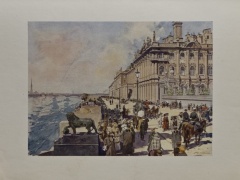
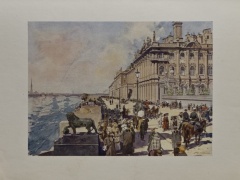
The exhibition presents travel guides to St Petersburg, travel stories of the 18th – 21st centuries and engravings from the collection of State Museum of the History of St Petersburg, demonstrating a wide range of travel literature for the Russian and foreign visitors to St Petersburg.
The exhibition presents travel guides to St Petersburg, travel stories of the 18th – 21st centuries and engravings from the collection of State Museum of the History of St Petersburg, demonstrating a wide range of travel literature for the Russian and foreign visitors to St Petersburg.
The first “descriptions” of the newly founded city of St Petersburg appeared in the 18th century. Among them were The Historical, Georgaphical and Topographical Description of St Petersburg from its Foundation in 1703 to 1751 by A. Bogdanov and The Description of the Russian Capital City of St Petersburg and Tourist Attractions in its Surrounding Areas, with the Map of 1794 by I. Georgi.
The exhibition in Peter and Paul Fortress charts the development of the genre of the tourist guidebook. Among the most popular St Petersburg guidebooks of the first half of the 19th century were The Remarkable Sites of Petersburg and its Surroundings by P. Svinyin (1818) and The Newest Travel Guide to Petersburg by F. Shreder, which provided details about places to be visited in St Petersburg. Sometimes guidebooks focused on particular aspects of travel. For example, The Delicate Journey around Nevsky Prospect (1828) tells about fashion stores.
Travel guides of the second half of the 19th century combined description of the places of interest and practical information about the hotels, restaurants, transport; many of the guidebooks provided itineraries around the city. Different guidebooks focused on the particular interests and concerns of certain groups of travelers, the style and the choice of the recommended places of interest depended on the audiences they were intended for. Guidebooks for educated travelers combined actual information and reflections about the problems of the city development. Travel guides “for ordinary people” provided details about works of architecture and monuments to the emperors, while the description of these landmarks didn’t exceed one page. Travel guides to St Petersburg were published in Russian and in Europe, and often included information about Russian customs and traditions.
Some of the guidebooks were aimed at the local citizens, for example: St Petersburg Places of Public Resort regarding the Benefit of Health (1881) and What Place of Public Resort to Choose? (1889) by V. Simansky. Guidebooks for children were published as well.
In the Soviet times guidebooks were for the purpose of propaganda. They combined travel information and proofs of the superiority of the Soviet state and the improvement of the conditions of the life of the Soviet people. The main subject of every travel guide to Leningrad was the revolutionary history of the city. The exhibition presents guidebooks published between 1933 and 1988. Special section of the display is dedicated to the modern guidebooks, published in the 2000s.